


Frequently asked questions
Answers to the questions customers ask us most, from choosing and fitting a dimmer to curing flicker. Search, or browse by product or topic.
Most asked
- Which dimmer do I need for my LED bulbs?
- How many lamps can my dimmer control?
- Which socket types are available in the European ranges?
- What wall box do the European ranges need?
- How do I wire a V-Pro dimmer on a 2-way circuit?
- How does the V-Pro Micro in-line dimmer work?
- How do I change the dimming mode on a V-Pro or V-Com dimmer?
- Where can I buy VARILIGHT products?
- How do I make a guarantee claim or return a faulty product?
- My LED lights flicker: how do I stop it?
Browse by product
-
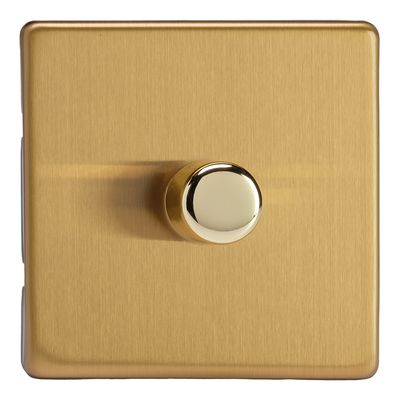 V-Pro dimmers and modulesPush on/off rotary LED dimmers for European wall boxes
41
-
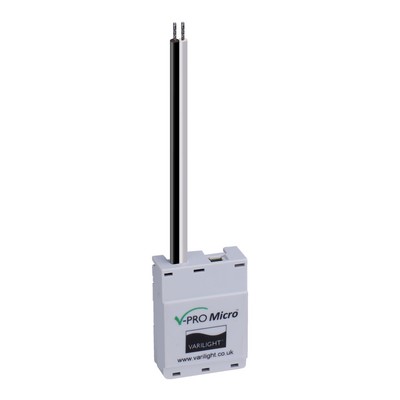 V-Pro MicroIn-line dimmers behind retractive switches
11
-
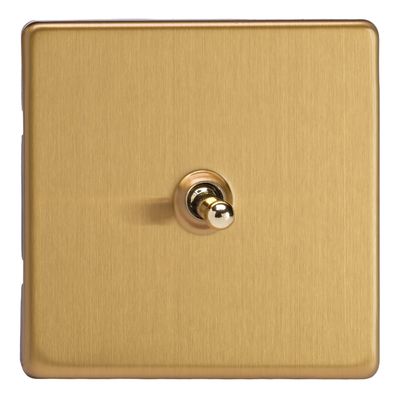 Light switchesRocker, toggle, retractive, impulse and lever switches
22
-
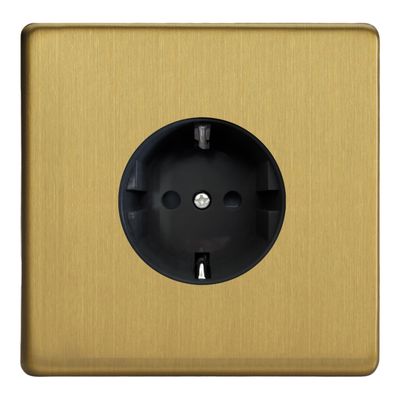 SocketsSchuko and pin earth (French) 16A sockets
21
-
V-Pro MultiwayRotary dimming from 2 or 3 switches
23
-
 V-ComLED dimmers for triac (leading-edge) loads
36
-
V-DimDimmers for halogen and filament lamps
17
-
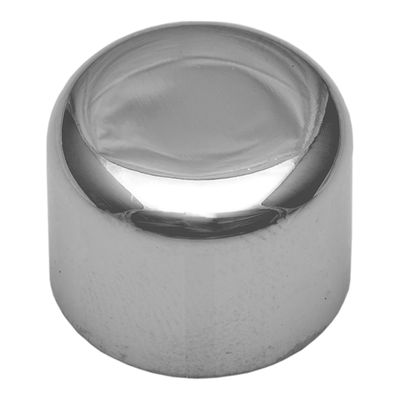 Knobs and sparesDimmer knobs and replacement parts
5
Choosing a dimmer
Which dimmer suits your lights, how much lighting it can take, and dimming from more than one switch.
Which dimmer do I need for my LED bulbs?
For dimmable LED lighting choose a V-Pro dimmer: our flagship range, designed for modern LED lighting, with push on/off switching and rotary dimming. In the European ranges the V-Pro family also includes:
- V-Pro Multiway: a dimming knob at 2 or 3 switch positions;
- V-Pro Micro: hidden behind retractive (push) switches.
If your LED lights or driver need leading-edge (triac) control, choose V-Com. Always choose lamps that are described as dimmable.
How many lamps can my dimmer control?
Add up the wattage of all the lamps the dimmer controls: the number of lamps times the watts printed on each. The total must not be more than the maximum load per gang on the dimmer's label and data sheet. For example, 8 LED downlights of 5W each add up to 40W.
| Dimmer | Load per dimmer (gang) |
|---|---|
| V-Pro | 0-120W or 0-300W, no minimum load |
| V-Pro Multiway | 120W (master dimmers 100W), no minimum load |
| V-Pro Micro | 160W of dimmable LED |
| V-Com | 0-100W, 0-180W or 15-180W (the first figure is the minimum) |
| V-Dim (halogen) | 60-400W, or 40-250W on 2-gang dimmers |
With low voltage lighting, add up the VA ratings of the transformers, not the wattage of the bulbs.
Is there a minimum load? Can I dim just one LED lamp?
V-Pro, V-Pro Multiway and V-Pro Micro dimmers have no minimum load, so they can dim a single LED lamp.
Some V-Com dimmers and every V-Dim dimmer have a minimum: it is the first figure of the rating on the label, for example 15-180W. The 0-100W and 0-180W V-Com dimmers have none. Below the minimum the lights may flicker: see flicker caused by too little load.
My LED driver says "triac" or "leading edge": which dimmer do I need?
- Triac or leading edge: choose V-Com, designed for LED lighting that needs leading-edge (triac) control. V-Pro dimmers are not suitable for triac dimmable drivers.
- Trailing edge: choose a V-Pro dimmer.
- 1-10V: choose an F-Series 1-10V dimmer.
If you are unsure which control your lamps need, check the lamp or driver manufacturer's data sheet, or ask us for advice: send us a message or email help@varilight.co.uk.
Is a V-Pro dimmer 1-way or 2-way?
Both. Each V-Pro dimmer has three terminals, C, L1 and L2, and works on 1-way circuits (one switch) and 2-way circuits (two switches, e.g. top and bottom of the stairs). V-Com dimmers are the same.
On a 2-way circuit replace only one of the switches with the dimmer: you dim from that switch, and the other switch turns the lights on and off. See how to wire it. To dim from every switch, see dimming from more than one switch.
Can I dim the same lights from more than one switch?
Yes. Choose by how you want to dim:
- A dimming knob at every switch (2 or 3 positions): one V-Pro Multiway dimmer with one or two companion controllers.
- Push (retractive) switches at any number of positions: a V-Pro Micro in-line dimmer pack.
Ordinary switches can't be used as the other positions with V-Pro Multiway: it needs companion controllers. If dimming from one switch is enough, a V-Pro dimmer works with an ordinary 2-way switch.
Can I mix lighting types on the same dimmer?
VARILIGHT dimmers are not designed to handle mixed lighting types on a single circuit. This includes combining halogen and LED lamps. With halogen lamps being phased out, most installations now use only dimmable LEDs, which ensures optimal performance and reduces the risk of overload.
Will my LED lamps work with your dimmers?
Our dimmers are designed for wide compatibility and are tested with many lamp types, including Megaman and Philips, which have performed well in testing. However, due to constant changes in LED technology and driver designs, we cannot guarantee compatibility with all lamps.
Before purchasing, please check our compatibility guide and the dimmer selection guide to make sure the lighting load you have is compatible with the dimmer you have chosen.
Which dimmer should I use for halogen or filament (incandescent) lamps?
While halogen and incandescent bulbs have been largely phased out in the UK and EU, some dimmers are still compatible for legacy installations. V-Dim dimmers suit mains halogen and incandescent lamps. V-Pro and V-Com dimmers can also be used with mains halogen and incandescent lamps, up to their LED maximum load.
For most modern installations we recommend LED lighting with our LED dimmers, which are optimised for LED lighting. We do not recommend V-Dim dimmers for dimmable LEDs, even if de-rated as some manufacturers suggest.
Can I use a V-Dim dimmer on a 2-way circuit?
Only a push on/off V-Dim dimmer. Rotary on/off dimmers are only suitable for 1-way circuits.
On a 2-way circuit (the same lights controlled by two switches), choose a push on/off dimmer and replace only one of the switches with it. You can only use one push on/off dimmer in a 2-way circuit, and it must be used with a normal switch. When you switch on a push on/off dimmer the lights come on at the level they were at before they were last switched off.
Can I replace just the dimmer module in my existing plate?
Yes. Our European replacement dimmer modules fit our European dimmer plates. Remove the knob and the front plate, unscrew the nut, take the old module out from the back and fit the new one.
- V-Pro (LED): MJP120.EU 0-120W, MJP300.EU 0-300W
- V-Com (LED, triac): MKP100.EU 0-100W, MKP180.EU 0-180W
Each module is 64 x 58 x 46mm. Its data sheet shows the instructions and where to buy it.
How does the V-Pro Micro in-line dimmer work?
The V-Pro Micro (MDJ160) is a small in-line dimmer that hides behind a light switch or ceiling rose. It is controlled by retractive (momentary) switches, the type that spring back after they are pressed: a short press turns the lights on or off, a long press dims them up or down. It dims up to 160W of dimmable LED and remembers your last brightness.
For more switch positions, wire more retractive switches in parallel: only one Micro pack is needed per lighting circuit, and every switch can dim. It does not need a neutral at the switch. For separate up and down buttons, choose the MDJ160K with a centre-off retractive switch. Driving mode, minimum and maximum brightness, Boost, child lock and reset are all set from the switch: see set up your dimmer.
See the plain English guide and the MDJ160 and MDJ160K instructions (PDFs).
Setting up and programming
Dimming modes, minimum and maximum brightness, resets, and pairing supplementary controllers, remotes and the app.
V-Pro and V-Com rotary dimmers
How do I change the dimming mode on a V-Pro or V-Com dimmer?
V-Pro dimmers have three modes: Mode 1 trailing edge (the default, best for most LEDs), Mode 2 simulated leading edge, not triac (certain LEDs) and Mode 3 alternative trailing edge (some LEDs). On V-Com dimmers Mode 1 is recommended; if you notice any flashing, try Mode 2 or, in some cases, Mode 3.
- Set the knob to maximum (MKP100 module: a high brightness level). Switch the lights off and on once per second, 3 times (6 presses of the knob in all), to enter configuration mode.
- For Mode 2: turn the knob fully anticlockwise and wait 2 seconds.
For Mode 3: turn it fully anticlockwise, then fully clockwise, and wait 2 seconds. - The lights flash to confirm: once for Mode 1, twice for Mode 2, three times for Mode 3.
To go back to Mode 1, reset the dimmer to factory settings. If Mode 2 draws too much current, the dimmer goes back to Mode 1 by itself.
These steps are for current dimmers. Older dimmers may be programmed differently: check the software version on the side of the module and use the matching leaflet from the instruction leaflets or earlier leaflets page. There is a programming video on VARILIGHT TV, and the steps for every range are in set up your dimmer.
How do I set the minimum brightness on a V-Pro or V-Com dimmer?
If your lights flicker at low brightness, raise the minimum. If they are too bright at the lowest setting, lower it.
- Turn the dimmer to a low brightness level (MJP120 and MJP300 modules: fully anticlockwise).
- Switch the lights off and on once per second, 3 times.
- The lights "step" up and down to confirm you are in configuration mode.
- Turn the knob fully clockwise to begin the adjustment.
- Slowly turn the knob down and up until you find your preferred minimum brightness.
- Leave the knob in this position: after 5 seconds the setting saves automatically.
Make sure all the lamps stay visibly on at the lowest setting (EU Ecodesign Regulation 1194/2012). Can't get into configuration mode? Child lock may be on. Other ranges: set up your dimmer.
How do I set the maximum brightness on a V-Pro or V-Com dimmer?
If the lights flicker at high brightness, lower the maximum. If they aren't bright enough, you can raise it.
- Set the dimmer to maximum (fully clockwise).
- Switch the lights on and off once per second.
- Set the knob to minimum, then switch on and off again.
- Return the knob to maximum and switch the lights on.
- In configuration mode, turn the knob fully anticlockwise to begin the adjustment.
- Slowly turn the knob until you find your preferred maximum brightness.
- Leave it for 5 seconds to save.
What is child lock, and how do I turn it on or off?
Child lock stops the dimmer going into programming mode by accident. If you can't get the dimmer to program, turn child lock off first. On V-Pro and V-Com dimmers:
- Set the knob to maximum and switch on and off twice.
- Set the knob to minimum and switch on and off twice.
- Set the knob to maximum and switch on, off, on.
- The lights step to confirm the lock is on.
Repeat the same steps to turn it off. V-Pro Multiway: see Multiway programming. Watch the child lock video on VARILIGHT TV.
I've changed the bulbs on my dimmer: do I need to do anything?
Yes. Always turn off the mains power before replacing bulbs controlled by a dimmer. If you have changed the type of bulb, reset the dimmer to its factory settings: see V-Pro and V-Com, V-Pro Multiway or V-Pro Micro in set up your dimmer.
How do I reset a V-Pro or V-Com dimmer to factory settings?
A reset restores Mode 1 and the original brightness settings.
- Set the knob to maximum and switch off and on 3 times, about once per second.
- Wait at least 3 seconds, then switch off and on 3 times again.
- The lights fade off: the reset is complete.
If the dimmer won't respond, child lock may be on. Resetting another range: set up your dimmer.
Some LEDs won't come on at low brightness: what is Drive (Boost)?
Drive gives LEDs that won't switch on at low brightness a short boost at start-up. On V-Pro and V-Com dimmers:
- Set the knob to minimum.
- Switch the lights on and off once per second.
- Set the knob to maximum, and switch on and off again.
- Set the knob to minimum and switch the lights on.
- In configuration mode, turn the knob up until the lamps switch on.
- Leave it for 5 seconds to save.
To turn Drive off, repeat the steps but skip step 5. The same feature is called Boost on V-Pro Multiway and on the V-Pro Micro, where it is set from the switch: see set up your dimmer.
V-Pro Multiway
How do I program a V-Pro Multiway dimmer?
Settings are changed with the knob on the dimmer (not a companion controller). "Hold" means press and hold the knob.
- Minimum brightness: set to minimum and hold for 6 seconds. The lights come on so you can adjust the minimum. Leave the dimmer for 3 seconds; the lights flash to show the new level is set.
- Maximum brightness: set to maximum and hold for 6 seconds. When the lights blink, turn the knob to adjust. Leave it for 3 seconds; the lights flash to confirm.
- Dimming mode: turn the dimmer off, then hold for 6 seconds. The lights pulse and go off. Press once for mode 1, twice for mode 2 or three times for mode 3 (mode 1 is the default).
- Boost (for LEDs that don't light at low brightness): turn the dimmer off, then hold for 12 seconds, ignoring the blink at 6 seconds. The lights come on so you can set the boost level.
- Child lock: set to minimum and hold for 12 seconds, ignoring the blink at 6 seconds. On: the lights come on for 2 seconds and go off. Off: the lights flash twice and go off.
- Factory reset: set to maximum and hold for 12 seconds, ignoring the blink at 6 seconds. The lights come on and fade to off.
If the dimmer won't program, turn child lock off first. Full instructions: V-Pro Multiway leaflet (PDF), or pick the setting in set up your dimmer.
V-Pro Multi-Point touch and remote dimmers
V-Pro Smart Wi-Fi dimmers
Fitting and wiring
Wiring 2-way and multi-way circuits, wall box depths and where to find the instructions. If in doubt, consult a qualified electrician.
Dimmers
How do I wire a V-Pro dimmer on a 2-way circuit?
Switch off at the mains first. If in doubt, consult a qualified electrician.
- Replace only one of the two switches with the dimmer (fitting two dimmers causes flicker). Note the position of each wire on the old switch, and keep any wires that were grouped together in one terminal together.
- The wire(s) from the common terminal of the old switch go into C.
- The other two wires go into L1 and L2, either way round.
- For metal faceplates, connect the earth wire to the marked earthing terminal.
- Fit the dimmer into the wall box without overtightening, check no wires are trapped behind it, restore the power and test.
1-way circuit (one switch): one wire into C, the other into L1 (either way round); L2 is not used.
More than one dimmer on the plate: treat each set of three terminals as a separate dimmer. If the old switch had terminals linked between gangs, link the same terminals on the dimmer with a short wire.
Diagrams are in the V-Pro instructions (PDF), and there is a V-Pro video on VARILIGHT TV. V-Com dimmers are wired the same way: see the V-Com instructions (PDF).
I have three or more switches (intermediate): can I fit a dimmer?
- Dim from one switch: a push on/off V-Pro or V-Com dimmer replaces one of the switches and the others stay as they are: see the 3-way (intermediate) switch and dimmer diagram on our wiring diagrams page.
- Dim from all three: V-Pro Multiway with two companion controllers.
- Dim from more than three: V-Pro Micro (any number of retractive switches).
How do I wire V-Pro Multiway companion controllers?
Use one V-Pro Multiway dimmer with up to two V-Pro Multiway companion controllers, for rotary dimming at each position. The companion controllers replace the other switches. Link them to the dimmer at the S and Live terminals; their third terminal takes the neutral or, where there is no neutral, a link to the dimmer's load terminal. Never connect neutral to the main dimmer.
Standard or retractive switches are not compatible: only use V-Pro Multiway companion controllers. The total cable length from the dimmer to the furthest companion controller must not exceed 50m. The V-Pro Multiway and companion controller instructions are on the instruction leaflets page.
Do I need a neutral wire?
- V-Pro Multiway dimmers: no. They install in place of a standard switch, and neutral must never be connected to the dimmer itself.
- V-Pro and V-Com rotary dimmers: no. They connect to the switch wires only (terminals C, L1 and L2).
- V-Pro Multiway companion controllers: they can be wired with or without a neutral (see the companion controller instructions on the instruction leaflets page).
- V-Pro Micro: no neutral is needed at the switch. Follow the leaflet: it warns not to connect the neutral to the main dimmer unit.
What wall box do the European ranges need?
The European fixed range and the European VariGrid range fit a standard European 40mm round or square wall box. Fix them with the screws or the claws supplied: see fitting a European fixed range product, fitting a VariGrid plate and the European fitting instructions (VEU001) on the instruction leaflets page.
The wall box for a particular product is also on its data sheet: type the product code into the search box. See also wall box depths.
Where can I find the instructions or a wiring diagram for my product?
The instruction leaflet, with its wiring diagrams, comes with your product. You can also find every current leaflet on the instruction leaflets page, and leaflets for older and discontinued products on the earlier leaflets page. Where relevant, check the software version and choose the correct leaflet: the software version is on the side of the dimmer module.
We also have a page of wiring diagrams and how-to videos. Every data sheet links to the product's leaflet: type the product code into the search box. If the wiring diagram is not enough, please contact a qualified electrician.
What do I need to remove before an insulation test?
Dimmers from all of our ranges should be disconnected for the duration of the insulation resistance test. Failing to do so could damage the dimmer and make the product guarantee invalid.
Switches, sockets and grid products
How do I wire a 2-way or intermediate light switch?
The wiring accessories instructions (PDF) have diagrams for 1-way, 2-way (two common forms of wiring, either may be used), intermediate and double pole switches. Install to the current IET Wiring Regulations; if in doubt, consult a qualified electrician.
- Switch off the mains supply and remove the fuse or switch off the circuit breaker first.
- The layout of the terminals may differ between fittings, so check the terminal markings carefully.
- For 2 or more gangs, the live wire may be connected to each COM terminal with a short length of sleeved wire.
- If the product has an earth terminal, connect the earth wire to it, then a short length of wire from that terminal to the earth terminal on the wall box, sheathed in green and yellow sleeving.
See also our wiring diagrams.
How do I fit a European fixed range product?
- Switch off the mains supply before beginning electrical work.
- Place the product face down on a soft cloth. Insert a screwdriver into one of the short slots between the decorative plate and the clear plastic edge, and twist gently one quarter turn to release the plate.
- Make sure the wall around the wall box is flat, and check where the terminals are before wiring: the layout differs between products.
- Connect the wires following the leaflet's diagram, with no bare wire showing. If the product has an earth terminal, connect the earth wire to it and a short green and yellow sleeved wire from it to the wall box's earth terminal.
- Fix the product to the wall box with the screws supplied, tightening evenly until just tight; or fit the claws: put the screws in each side, slide the claws onto them, spin on the nuts, put the product into the box and tighten the screws until it is secure. Don't overtighten.
- Push the decorative front plate into place, pressing gently on each side until it clips on, then switch the mains back on.
The full steps are in the European fitting instructions (VEU001) on the instruction leaflets page. If in doubt, consult a qualified electrician.
How do I fit a European VariGrid plate?
- Unclip the clear plastic frame from the back of the decorative faceplate. If you are fitting with claws, take the plastic cover plate and the metal fascia off each insert (on a 16A socket insert, remove the central screw first; on a dimmer, remove the knob).
- Hold the frame against the wall, then wire up and fix the first insert into the wall box with fixing screws or claws, without overtightening.
- Fit and wire each of the other inserts the same way.
- Tighten all the screws or claws more firmly, so the assembly is secure and straight. On 16A sockets, refit the central screw.
- If you used claws, fit each metal fascia into its cover plate and push the cover plate into place.
- Clip the decorative faceplate onto the frame, pressing firmly over each clip, and refit any dimmer knobs.
The VariGrid steps, with drawings, are on the back of the European fitting instructions (VEU001) on the instruction leaflets page.
Transformers
Buying
Where to buy, orders, trade buying and bespoke products.
Where can I buy VARILIGHT products?
Our European ranges are sold through our distributors and online shops across Europe:
- distributors by country: they can tell you where to buy near you;
- online shops, including My Switch Shop, which delivers worldwide.
Every data sheet shows where to buy that product: look it up by code on the All products page.
I'm an electrician or trade buyer: how do I buy?
Please contact the VARILIGHT distributor in your country: see distributors by country. For anything else, our export team is on +44 1293 223333 or mail@varilight.co.uk.
Can I get prices directly from VARILIGHT?
VARILIGHT is a manufacturer and does not sell directly to end users, so we are unable to provide pricing information. For pricing and availability, please contact one of our distributors or online shops.
Where can I see the finishes, or get a catalogue?
See every finish of the European fixed range and the European VariGrid range, or ask your distributor.
Is a product still available, or has it been discontinued?
Look the product up by code on the All products page. The data sheet says if a product is made to order or no longer available, and shows where to buy current products. For a discontinued product, see what happens if my product is obsolete.
I have a question about an order, delivery or invoice
Please contact the shop or distributor you ordered from: they handle orders, deliveries, invoices and returns. If they can't help, please send us a message or email help@varilight.co.uk.
Parts, finishes and care
Knobs and spare parts, product codes and data sheets, finishes, cleaning and decorating.
What finishes are your products available in?
See every finish of the European fixed range and the European VariGrid range: each finish has a page listing every product in it, with a data sheet for each.
Where can I find product codes and data sheets?
If you know the product code, enter it on the All products page (or in the search box at the top of any page) to go straight to its data sheet. Otherwise search by range, finish or product type, or browse a range and narrow it down. Every finish of the European fixed range and the European VariGrid range has its own page, with a link to each product's data sheet.
Data sheets show the instruction leaflet and where to buy.
Where can I get a Declaration of Conformity?
Open the product's data sheet (enter the product code on the data sheets page) and choose "Declaration of Conformity": it opens a printable declaration for that product. Products with smart features also link to their statement of compliance with the UK connectable product security regulations.
Where can I get a replacement dimmer knob?
All our knobs have the same fixing, so they fit every VARILIGHT dimmer. Screwless products need a "pipped" knob, which is slightly raised for spacing. Pipped knobs aren't sold separately: for a replacement, please send us a message or email help@varilight.co.uk and our customer services team will help.
Spare knobs are sold singly or in packs of 10 (the same code with 10 on the end). Click a code for its data sheet, which shows where to buy it:
How do I clean my switches and sockets?
Decorative products should be treated with great care when cleaning. Excessive scrubbing or the application of abrasive cleaning products may permanently damage the quality of the finish.
We recommend cleaning with a damp soft cloth. The application of detergents is not recommended. Dilute any detergents you do intend to use and always wipe away with a damp cloth to remove any traces of detergent before allowing the product to air dry.
How should I protect my switches and sockets when decorating?
Do not use masking tape on any decorative products. The adhesive may chemically bond with the surface finish.
For Screwless products we recommend removing the faceplate and taking care not to paint over the plastic clips, as this may prevent the faceplate from clipping back on.
For products with visible fixing screws we recommend turning off the mains power, removing the fixing screws and pulling the product gently away from the wall, taking care that the wires remain fully fixed into their terminals.
When the product is clear of the wall, cover it with a plastic bag and use an elastic band to secure it behind the product. You can then paint or wallpaper the wall.
Please note that it can take several weeks for the chemicals in paint or wallpaper paste to become inert. Before this time there is a danger that they will react with the product if it has a metal faceplate. For this reason we recommend using a plastic bag as a temporary gasket between the product and the wall once it is dry to the touch. In other words, use the plastic to form a barrier between the product and the surface of the wall.
Which VARILIGHT ranges fit European wall boxes?
Two ranges, both designed to fit European round wall boxes, with sockets to CEE 7/4 (German "Schuko", Type F) and CEE 7/5 (French, Type E):
- the European fixed range: a screwless faceplate with a fixed assortment of switches, sockets and dimmers;
- the European VariGrid range: a clip-on screwless faceplate with mix-and-match switch, socket and dimmer inserts.
Your nearest distributor can tell you where to buy.
A knob, screw or other part is missing or broken
Please send us a message or email help@varilight.co.uk, telling us the product code and what is missing or broken, and we will sort it out.
There is some colour variation in the products I have bought
Some colour variation is unavoidable on decorative products. Materials are purchased in batches and there may be some minor differences in the finish from batch to batch. At VARILIGHT we aim to keep these differences to an absolute minimum.
Please note that some finishes are more prone to colour variation than others due to the nature of the production process; for example the Iridium Black finish is intrinsically more variable than our Pewter Effect finish.
In most cases any differences will not be noticeable even if the products are mounted side by side.
My switch or socket has begun to tarnish
Cu29 raw copper is designed to tarnish: a natural patina develops without regular cleaning. To brighten it, wipe lightly with a little citric acid on a polishing cloth, and never coat it.
On other finishes, tarnishing is usually caused by damp. The source of the damp may be a damp wall. In this case you can prevent further tarnishing by placing a plastic barrier between the product and the wall (for example a piece cut from a clear plastic bag).
If the surface of the product has been damaged, for example during cleaning, then damp may have permeated and caused tarnishing of the faceplate. Unfortunately in this case the product is permanently damaged.
If you have recently decorated, please note that it can take several weeks for the chemicals in paint or wallpaper paste to become inert. Before this time there is a danger that they will react with the product if it has a metal faceplate. For this reason we recommend using a plastic bag as a temporary gasket between the product and the wall once it is dry to the touch.
If your products are permanently damaged it may be that you can claim on your house insurance for replacement products.
Which socket types are available in the European ranges?
16A flush sockets in two types:
- Schuko earth (CEE 7/4, Type F), used in Germany and much of Europe;
- pin earth (CEE 7/5, Type E), used in France and Belgium.
They come in 1, 2 and 3 gangs, with black, white or grey inserts depending on the finish, and as a socket with a USB plate. Every finish's page lists the sockets in that finish.
Guarantee and older products
The lifetime guarantee, how to claim, and help for products we no longer make.
What does the VARILIGHT guarantee cover?
VARILIGHT products are covered by a lifetime guarantee against faults arising from defective materials or workmanship. "Lifetime" means the expected service life of the product while you own it. The guarantee is for the original purchaser, with proof of purchase.
We will repair or replace faulty units, provided that:
- the unit has been installed correctly, used only with compatible loads, and not overloaded or run on an incorrect power supply;
- the dimmer module has not been tampered with (faulty modules from multi-gang units may be removed for servicing without affecting the others).
It does not cover normal wear and tear, accidental damage or misuse, consequential loss or damage, installation costs, or problems caused by incompatibility between lamps and the dimmer. It does not affect your statutory rights.
The lifetime guarantee covers every VARILIGHT product. See our lifetime guarantee.
How do I make a guarantee claim or return a faulty product?
Many problems can be solved without a replacement, so please check the troubleshooting answers first. Then:
- Send us a message, or email help@varilight.co.uk, with your purchase details and a description of the problem. Tell us the product code, the batch number (on the plastic moulding at the back of a dimmer), the type and wattage of the lamps it controls, and the fault. Keep your proof of purchase.
- The faulty product must be returned: we'll tell you where to send it, to VARILIGHT in the UK or to Varilight Europe Kft in Hungary (both addresses are in the instruction leaflet). Pack it securely with your proof of purchase, your contact details and return address, the type and wattage of the lighting or other load, and the details of the fault.
- If the claim is approved, we'll repair or replace the product.
See our lifetime guarantee.
Where do I find the batch number or software version?
The batch number is printed on the plastic moulding at the back of the dimmer module: on the side or the bottom, depending on the model. The leaflet has a space to record it, and it helps us give you the right technical support. Where it applies, the software version is on the side of the dimmer module: use it to choose the right instruction leaflet.
Do you accept liability for advice given by your support teams?
All advice is provided in good faith based on the information available at the time. Varilight (Doyle & Tratt Products Ltd) does not accept liability for consequential loss, damage, or installation costs resulting from advice given. It remains the installer's responsibility to ensure product suitability and compatibility for the intended application.
What happens if my product is obsolete?
If a product range is discontinued, we may not be able to supply exact replacements. Where possible, we will offer a complimentary upgrade to a current equivalent model under the terms of the product guarantee. Please contact Customer Services (send us a message or email help@varilight.co.uk).
One dimmer on my multi-gang plate is faulty: can I keep using the others?
Yes. It is perfectly in order to remove a faulty dimmer module from a multi-gang dimmer by pulling off the knob and unscrewing the nut under the knob (and removing the front plate first, on a Screwless product). You will then still have the remaining modules working while we service the faulty one. See how to make a claim.
Troubleshooting
Dimmers that have stopped working, flicker, buzz or glow, and other problems with installed products.
Not working, or switching off
My dimmer has stopped working: what should I do?
Many faults can be cleared without replacing anything. Switch off at the mains before touching any wiring and, if in doubt, consult a qualified electrician.
- Reset the power. Switch the lighting circuit off at the circuit breaker, then back on after a few seconds. An overloaded dimmer switches itself off to protect itself.
- Check the load. Add up the wattage of all the lamps on the dimmer (for low voltage lighting, the VA ratings of the transformers). It must not be more than the maximum per gang on the dimmer's label. See how many lamps a dimmer can control.
- Changed the bulbs? If you have changed the type of lamp, reset the dimmer to its factory settings: see set up your dimmer.
- New installation? Check the wiring against the diagram in the instruction leaflet.
- Lights come on but won't dim? See my dimmer won't dim the lights.
If it still doesn't work, the dimmer may be faulty. It is covered by our lifetime guarantee: see how to make a claim. It helps to have the product code, the batch number (printed on the plastic moulding at the back of the dimmer) and the type and wattage of your lamps to hand.
My dimmer turns the lights on and off but won't dim them
V-Pro and V-Com dimmers: we would advise you to perform the factory reset on the dimmer switch. Instructions are also in the product instruction leaflet and on VARILIGHT TV. If you have performed the factory reset and the lights are still not dimming, please contact Customer Services: send us a message or email help@varilight.co.uk.
Other dimmers: this problem is usually caused when one of the components in the dimmer has failed, usually due to a plasma. Plasmas can be caused when a mains halogen light bulb (e.g. GU10) fails. For this reason we recommend only using good quality mains halogen bulbs from well-known brands. If a dimmer shows this fault it will need to be replaced.
The best type of dimmer to use with mains halogen bulbs is a VARILIGHT V-Plus series dimmer. The rapid on-board overload protection can usually turn the dimmer off so quickly that it survives a spike in the mains supply.
My lights are switching to a reduced brightness
The usual reason is that the dimmer is overloaded. V-Pro and V-Com dimmers switch off until the overload is removed.
Check the maximum load on the label on the back of the dimmer. Add up the wattage of the lamps it controls; with low voltage lighting, add up the VA ratings of the transformers, not the bulbs. If the total is more than the maximum, use fewer or lower-wattage lamps, or a higher-rated dimmer: see how many lamps a dimmer can control.
Flickering, buzzing and glowing
My LED lights flicker: how do I stop it?
Most flicker can be cured with the dimmer's own settings. On V-Pro and V-Com dimmers:
- Flicker at low brightness: raise the minimum brightness.
- Flicker at high brightness: lower the maximum brightness.
- Flashing at any level: change the dimming mode. Mode 1 suits most LEDs; some perform better in Mode 2 or, in some cases, Mode 3.
Also check that the lamps are described as dimmable, and are all of the same type: our dimmers are not designed for mixed lighting types on one circuit; that on a 2-way circuit only one of the switches has been replaced with a dimmer; and, if your dimmer has a minimum load (the first figure of the rating on some V-Com and every V-Dim dimmer), that the lamps add up to more than it: see flicker caused by too little load.
V-Pro Multiway and V-Pro Micro dimmers have the same kind of settings: see set up your dimmer.
My dimmer is causing the lights to flicker (minimum load)
This problem is usually caused when the dimmer is under-loaded.
Check the label on the back of the dimmer, where the minimum and maximum load are printed. Add up the ratings of all the light bulbs the dimmer controls and make sure they are more than the minimum. V-Dim dimmers work best with at least 100W. The 0-100W V-Com has no minimum.
If your lighting load is below the minimum, choose a different dimmer or use bulbs with a higher rating: you can still dim them right down. For dimmable LEDs choose a V-Pro dimmer: V-Pro dimmers have no minimum load.
My lights won't dim low enough, or go off at the lowest setting
- Too bright at the lowest setting: reduce the dimmer's minimum brightness.
- Off or flickering at the lowest setting: raise the minimum brightness.
- If some LEDs won't switch on at low brightness, turn on Drive (Boost), which gives them a short boost at start-up.
When the dimmer is installed, all the lamps must stay visibly on at the lowest brightness setting (EU Ecodesign Regulation 1194/2012). How low a lamp will dim varies according to the brand and type of LED. The same settings on V-Pro Multiway and V-Pro Micro (set from the switch): see set up your dimmer.
My dimmer or my lamps are buzzing
It is quite normal for a dimmer switch to buzz a little. A dimmer is more prone to buzz with certain types of lighting load. If your lighting load is causing your dimmer to buzz excessively, we recommend changing the dimmer for a trailing-edge dimmer. Our V-Pro series trailing-edge dimmers are the quietest running dimmers available.
If the LED lamps themselves buzz while a V-Pro dimmer is on, a component within the lamps is vibrating during operation. Changing the driving mode on the dimmer may improve this. If the lamps continue to buzz after trying the different driving modes, we recommend contacting the LED manufacturer for further advice.
With other brands of dimmable electronic transformer, noise levels may vary depending on the type and quantity of transformers used.
My LED lamps glow or flicker when the dimmer is switched off
All touch and remote dimmers draw a tiny standby current, much like a television, so that they are ready to respond. Some LED lamps are sensitive enough to glow on this current: check your LED lamps are suitable for use with dimmers that have a standby mode.
Our LEDFix load regulator (part number YAGF, previously called GlowFix) solves this: one LEDFix connected in parallel with any of the lamp fittings stops sensitive LED lights from glowing or flickering. It draws less than 1 watt. See the LEDFix instructions (PDF) and the LEDFix wiring diagram. Another solution would be to use a V-Pro push on/off rotary dimmer.
My lights flash 2 or 3 times before staying on
This happens when the dimmer detects too much current draw from the lamps on start-up, so it charges the lamps in steps in order to protect itself. Changing the driving mode on the dimmer may improve this behaviour. Instructions are also in the product instruction leaflet and on VARILIGHT TV.
My LED lamps start slowly or take time to reach full brightness
The V-Pro soft-start function gradually increases power over approximately 1 second to protect against inrush current and improve lamp life. LED drivers vary widely in design, so some may start differently or take longer to reach full brightness.
Changing the driving mode on the dimmer may improve this behaviour, although results cannot be guaranteed due to lamp variability.
My LED lamps don't switch off when the dimmer enters programming mode
When the dimmer enters programming mode there is a small amount of current that passes through the module to allow the dimmer to be reconfigured. Some LED lamps are extremely sensitive and will glow even though the dimmer is effectively off. You should still be able to complete the programming procedure. If you are not certain, change one of the LED lamps for an ordinary halogen or filament lamp just for the duration of the programming, as this should stop the LED lamps glowing when they should be off.
Is it normal for my dimmer to feel warm?
Yes. It is normal for dimmer switches to feel slightly warm during operation, particularly when they are controlling loads close to their maximum rated capacity. During dimming a small amount of heat is generated, and it is intentionally transferred to the front plate through the dimmer module's heat sink. This helps dissipate heat efficiently and protects the internal electronic components.
Touch and remote dimmers also draw a very small standby current when switched off, so they may feel slightly warm even when off. They have over-temperature protection, and the fire retardant material around the electronics at the back may show some discolouration from moderate temperatures, which is expected in normal operation.
Touch, remote and Wi-Fi controls
Switches, sockets, USB and transformers
My light switch or socket has stopped working
Switch off at the mains before removing the plate, and if in doubt consult a qualified electrician. Check the wiring against the wiring accessories instructions (PDF): all terminals must be securely tightened, including those tightened at the factory, and no bare wire should stick out of a terminal.
If the product itself is faulty, it is covered by our lifetime guarantee: see how to make a claim.
Still stuck?
Our customer services team will help. To get the quickest answer, tell us the product code, the batch number from the back of the dimmer, and the make, wattage and number of lamps.